Removing a seized bearing can turn a routine automotive repair into a time-consuming struggle. The right puller helps apply force more evenly, reduce damage to surrounding parts, and make difficult jobs more predictable.
We compared 10 bearing pullers for cars across wheel-bearing presses, blind-hole kits, rear-axle tools, slide-hammer sets, and compact two-jaw designs to help you choose the right setup for your vehicle and repair work.
Best 10 Bearing Pullers for Cars Picks for 2026
Best Overall

- 24-piece front bearing press set
- Multiple sleeves and bushings
- Storage case included
Best For: Front-wheel-drive cars and light trucks
Best Blind-Hole Option
LainKeen Blind Hole Bearing Puller

- Eight collets from 8mm to 32mm
- Slide hammer included
- Handles bearings and bushings
Best For: Internal and blind-hole bearing removal
Best Rear Axle Set

- Three rear axle puller sizes
- Fits a 5/8-inch slide hammer
- Force-distributing washers
Best For: Semi-floating rear axle bearings
Most Versatile Internal Kit
HQSSWUCH 21-in-1 Bearing Puller

- Six collets and three hooks
- Heat-treated steel construction
- Organized heavy-duty case
Best For: Varied internal bearing removal tasks
Best Overall Rear-Axle Kit
OMT Rear Axle Bearing Puller Kit

- 8-piece slide-hammer axle, bearing, and seal set
- Three adapters cover 1-1/4 to 2-7/8-inch IDs
- Forged steel construction for repeated shop use
Best For: Rear axle bearing and seal removal on cars and light trucks
Best Blind-Hole Versatility
12-Piece Blind Hole Bearing Puller Set

- Eight expanding collets cover 8 to 30 mm sizes
- Supports slide-hammer and two-jaw pulling
- Useful for motorcycles, small engines, and compatible cars
Best For: Small blind-hole bearing and bushing removal
Best Heavy-Duty Separator Kit
OMT Bearing Splitter Puller Set

- Two separator jaws with a stated 5-ton capacity
- Extensions and L-type legs improve reach
- Heat-treated Cr-V steel construction
Best For: External bearing, hub, gear, and pulley removal
Best Adjustable Pick
4-Inch 2-Jaw Car Bearing Puller
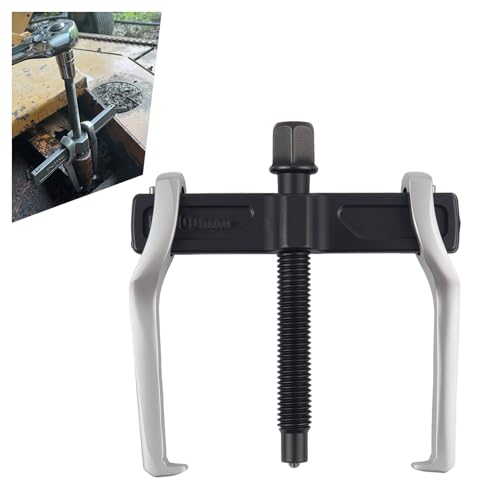
- Inside and outside gripping
- Adjustable depth and width
- Steel construction with anti-slip head
Best For: DIY users tackling smaller bearing and gear removal jobs
Best Complete Kit
OMT 38-Piece Wheel Bearing Press Kit

- 38-piece puller and press set
- Multiple sleeves and bushings
- Includes portable storage case
Best For: Garages serving multiple vehicles and bearing sizes
Best for Rear Axles
Slide Hammer Bearing Remover Kit

- Three rear axle adapters
- 1 to 2-7/8-inch ID coverage
- Includes slide hammer and yoke
Best For: Rear axle bearing and flanged-shaft removal
Best Overall – OMT Wheel Bearing Press Kit
For drivers and home mechanics comparing bearing pullers for cars, the OMT Wheel Bearing Press Kit is a versatile front-wheel-drive option. Its 24-piece assortment is designed to remove and install wheel bearings without hammering or disturbing the steering knuckle and strut assembly.
Best For: Front wheel bearing removal and installation on many front-wheel-drive cars and light trucks.
Pros:
- Includes multiple sleeves and bushings for broad vehicle compatibility.
- Sliding screws provide controlled removal without hammering.
- Heat-treated, blackened screws and alloy-steel construction support durability.
- Includes a portable blow-molded storage case.
Cons:
- Designed primarily for front wheel bearing work rather than every bearing-puller application.
- The threaded rod should be lubricated before use.
With its large assortment and controlled press action, this kit is a practical choice for routine front-end bearing service. The included case also makes it easier to keep the many sleeves and bushings organized.
Best Blind-Hole Option – LainKeen Blind Hole Bearing Puller
The LainKeen 12-piece set is a focused choice for shoppers seeking bearing pullers for cars with internal or blind-hole bearings. Eight collets cover 8mm to 32mm openings, and the included slide hammer is suited to removing bearings and bushings from vehicles and other equipment.
Best For: Internal bearing and bushing removal where access is limited to the bore.
Pros:
- Covers blind holes from 8mm to 32mm with eight collets.
- Includes a slide hammer for straightforward extraction.
- Extendable collet and threaded adapter support tight or seized parts.
- Comes in a blow-molded carrying case.
Cons:
- Its size range is limited to the supplied 8mm–32mm collets.
- The tool arrives with a thin layer of anti-rust oil that should be wiped clean before use.
This set is especially useful when a conventional external puller cannot grip the part. The option to use the slide hammer or tighten the countersink hammer gives users more control during removal.
Best Rear Axle Set – OMT Rear Axle Bearing Puller
For mechanics specifically servicing semi-floating rear axles, the OMT Rear Axle Bearing Puller is a compact alternative to a larger universal kit. It includes three puller sizes and is designed to work with a 5/8-inch slide hammer.
Best For: Removing worn or damaged semi-floating rear axle bearings on many domestic vehicles.
Pros:
- Three sizes cover inner diameters from 1-1/4 to 2-7/8 inches.
- Washers distribute force to help avoid damage from claw-type pullers.
- Rotary connectors improve access in narrow spaces.
- Laser-etched size markings and a custom case simplify organization.
Cons:
- Requires a compatible 5/8-inch slide hammer.
- Its specialized three-piece design is less versatile than a broad bearing press kit.
This is a sensible pick when the job is rear axle bearing removal rather than general wheel-bearing service. Its size coverage and force-distributing washers make it a focused, space-conscious tool for the intended application.
Most Versatile Internal Kit – HQSSWUCH 21-in-1 Bearing Puller
The HQSSWUCH 21-in-1 kit gives shoppers looking for bearing pullers for cars a broad internal-removal assortment. Six collets, three hooks, and three grips are intended to handle different bearing sizes and shapes, with a screw-driven design for controlled extraction.
Best For: Mechanics who want one internal bearing puller kit for varied bearing, gear, and kit-removal tasks.
Pros:
- Includes six collets plus three hooks and three grips.
- Drop-forged, heat-treated steel construction is designed for strength.
- Black oxide coating helps resist corrosion.
- Heavy-duty case keeps components organized and portable.
Cons:
- The kit is intended for internal removal and may not replace a dedicated wheel-bearing press.
- Its threaded rod should be lubricated before use.
This kit stands out for component variety and its ability to address multiple internal bearing configurations. It is a useful choice for a mixed repair toolkit, provided the supplied collet sizes match the bearing being serviced.
Best Overall Rear-Axle Kit – OMT Rear Axle Bearing Puller Kit
For shoppers comparing bearing pullers for cars, the OMT Rear Axle Bearing Puller Tool Kit stands out as a broad rear-axle solution. Its slide hammer, yoke, hook, and three bearing adapters support axle, bearing, and seal removal on many domestic cars and light trucks.
Best For: Rear axle bearings, axle components, and press-fit seals requiring a slide-hammer setup.
Pros:
- Includes an 8-piece set with slide hammer, yoke, hook, and adapters.
- Three adapters cover bearing inner diameters from 1-1/4 to 2-7/8 inches.
- Heavy-duty forged steel construction with chrome-plated, galvanized, and blackened components.
Cons:
- Designed primarily around semi-floating rear axle bearing applications.
- At 10 pounds, it is heavier than a compact puller-only kit.
This is a practical choice when you want one kit for rear axle bearings, seals, and related flange-type extraction jobs. Confirm the adapter range and vehicle fit before buying.
Best Blind-Hole Versatility – 12-Piece Blind Hole Bearing Puller Set
Among bearing pullers for cars, this 12-piece blind-hole set is aimed at internal extraction jobs where an outside jaw puller cannot get behind the bearing. Its expanding collets, extensions, two-jaw puller, and slide hammer cover a range of small bearing and bushing applications.
Best For: Blind-hole bearings on motorcycles, bicycles, small engines, ATVs, and compatible automotive applications.
Pros:
- Includes eight expanding collets for bearings from approximately 8 to 32 mm.
- Can be used with a slide hammer or a two-jaw puller.
- Chrome-plated shaft, T-handle, and alloy-steel construction support controlled pulling.
Cons:
- Its size range is better suited to smaller bearings than large automotive units.
- Vehicle compatibility depends on achieving the correct fit.
This kit offers useful flexibility for mixed maintenance work, especially when bearings sit inside housings or other blind holes. Check the collet dimensions and follow the instructions for the specific application.
Best Heavy-Duty Separator Kit – OMT Bearing Splitter Puller Set
For bearing pullers for cars that need to grip from behind a bearing, the OMT Bearing Puller Set uses knife-edge separator jaws, a forcing screw, extensions, and L-type legs. The two splitter sizes and stated 5-ton capacity make it suitable for a range of hub, axle, gear, pulley, and steering-wheel jobs.
Best For: Large or small bearings in tight spaces on cars, light trucks, ATVs, and similar equipment.
Pros:
- Includes 2-inch and 3-inch separator jaws with a 6-inch yoke.
- Five-ton capacity is specified for both bearing splitter jaws.
- Heat-treated Cr-V steel and black oxide finish support durability and corrosion resistance.
Cons:
- At 11 pounds, the kit is relatively substantial for occasional home use.
- Its separator design may not suit internal blind-hole bearings without an accessible gripping edge.
This is a strong option when a bearing is accessible from the outside but tightly seated or located in a restricted area. The extensions help adapt the puller to different reach requirements, while the separator jaws provide a firm grip.
Best Adjustable Pick – 4-Inch 2-Jaw Car Bearing Puller
If you need bearing pullers for cars for occasional maintenance or smaller dismantling jobs, this adjustable 2-jaw model offers a straightforward, flexible design. Its jaws can be configured for inside or outside gripping, with adjustable depth and a maximum inside width of 3.39 inches.
Best For: DIY users handling smaller bearings, gears, flywheels, and other parts that fit its 4-inch puller range.
Pros:
- Supports both inside and outside gripping.
- Adjustable depth and width for varied jobs.
- Steel construction with a six-corner head and smooth-threaded operation.
- Limit button helps keep handling stable during use.
Cons:
- Its compact size may not suit larger bearings or heavy-duty applications.
- Maximum inside width is limited to 3.39 inches.
This is a practical choice when versatility and compact storage matter more than a large multi-piece kit. Confirm the required jaw reach and opening before purchase.
Best Complete Kit – OMT 38-Piece Wheel Bearing Press Kit
For shoppers seeking bearing pullers for cars with broad coverage, this 38-piece OMT kit combines bearing installation tools with separator and pulling components. Multiple sleeves and bushings are designed to cover common sizes on many front-wheel-drive vehicles, ATVs, and light trucks.
Best For: Home garages and workshops that need one organized kit for wheel bearing removal and installation across several vehicle types.
Pros:
- Includes 38 pieces for pulling and pressing applications.
- Works with bearings, wheel hubs, axle shafts, gears, pulleys, and steering wheels.
- Multiple sleeves and bushings support a wide range of common sizes.
- Heat-treated 1045 steel and black oxide finish provide durability and corrosion resistance.
Cons:
- The larger kit may be more equipment than needed for a single bearing job.
- Compatibility still depends on matching the included sizes to the vehicle.
With its extensive assortment and blow-molded case, this is the most versatile option of the three for repeated garage use. Check the listed dimensions and included components against your application.
Best for Rear Axles – Slide Hammer Bearing Remover Kit
This rear axle kit is a specialized option among bearing pullers for cars, pairing a slide hammer with three expanding adapters. The adapters cover inner diameters from 1 to 2-7/8 inches, making the set suited to semi-floating rear axle bearing removal and related flanged-shaft pulling tasks.
Best For: Mechanics removing rear axle bearings and parts with compatible threaded holes, including stud axles and spur gears.
Pros:
- Three adapters cover several rear axle bearing inner-diameter ranges.
- Slide hammer and four-point yoke provide a dedicated axle-pulling setup.
- Heat-treated AISI 1045 steel offers sturdy, wear-resistant construction.
- Can also extract compatible parts with threaded holes.
Cons:
- Its specialized rear axle focus makes it less versatile than a general bearing kit.
- The 10.43-pound tool set is comparatively heavy to store and transport.
Choose this kit when rear axle work is the priority and the adapter ranges match the bearing dimensions. For mixed bearing jobs, a broader press-and-separator set may be more suitable.
How We Picked the Best Bearing Pullers for Cars
We grouped these tools by the jobs they are designed to handle rather than treating every puller as interchangeable. Selection criteria included bearing access, puller style, size range, included adapters, force application, construction, portability, and usefulness for common automotive repairs.
Wheel-bearing press kits were assessed for coverage of common hub and bearing sizes. Blind-hole sets were considered for bearings that cannot be reached from behind, while rear-axle kits were judged by their slide-hammer arrangements and axle-specific adapters. We also included compact two-jaw and split-bearing pullers for lighter or more specialized work.
Quick Comparison
| Tool type | Best suited to | Main advantage |
|---|---|---|
| Wheel-bearing press kit | Hub and press-fit wheel bearings | Broad adapter coverage and controlled force |
| Blind-hole puller set | Internal bearings with limited rear access | Expanding collets reach inside the bearing |
| Rear-axle puller kit | Rear axle bearing removal | Slide hammer and axle-specific attachments |
| Two-jaw puller | Accessible inner or outer bearing edges | Compact and straightforward setup |
| Bearing splitter set | Bearings with a usable shoulder or lip | Separates the bearing before pulling |
Key Buying Factors for Bearing Pullers for Cars
Match the Puller to Bearing Access
Choose a blind-hole collet when you cannot get behind the bearing. Use a press-style kit when the bearing can be supported and pushed out through a hub or knuckle. A two-jaw puller works only when its jaws can securely grip the part without slipping.
Check Sizes and Vehicle Compatibility
Compare the kit’s collet, adapter, and press-disc dimensions with the bearing and housing. A larger piece count can improve coverage, but only if the included sizes fit your applications. Rear-axle kits should also match the axle design and adapter pattern.
Consider Force and Control
Slide hammers remove bearings through impact and are useful where a threaded forcing screw cannot be positioned. Press kits provide slower, more controlled force and may be preferable near delicate hubs, seals, or machined surfaces. Follow the tool’s load limits and use proper support.
Inspect Construction and Organization
Look for solid threaded rods, durable jaws or collets, secure adapter connections, and a case that keeps components organized. Lubricating threads and keeping pulling force centered can improve both performance and service life.
Who Should Buy Which Bearing Pullers for Cars?
- DIY owners handling wheel hubs: Choose a wheel-bearing press kit with multiple press plates and adapters.
- Home mechanics working on enclosed housings: A blind-hole puller with a slide hammer is the more suitable choice.
- Rear-axle repair specialists: Select a dedicated rear-axle kit with the correct yoke and adapters.
- Occasional, lighter repairs: A compact two-jaw puller may be easier to store and quicker to set up.
- Mechanics wanting broader coverage: A combination kit with press, splitter, or multiple puller styles offers greater versatility.
Before buying, identify the bearing’s inner and outer diameters, available clearance, and removal direction. That quick check is more important than simply choosing the kit with the highest part count.