Unstable voltage can shorten equipment life, cause servo jitter, and interrupt sensitive electronics. The best servo voltage stabilizers help maintain a steadier supply, but the right choice depends on whether you need industrial voltage regulation or RC power and signal testing.
This roundup covers high-capacity three-phase equipment alongside drone stabilizers, servo testers, telemetry devices, and flight-control systems. Use the guide below to match voltage range, capacity, controls, and protection features to your setup.
Best 10 Servo Voltage Stabilizers Picks for 2026
Industrial Precision
7.5KW Three-Phase Servo Transformer

- Real-time voltage and frequency adjustment
- Fault detection with protection features
- Stable, adjustable output with data feedback
Best For: Three-phase precision power-control applications
FPV Power Support
16V 3300uF RC Drone Stabilizers

- 3300uF filtering for smoother BEC output
- FUTABA-compatible receiver connection
- Five compact units for multiple builds or spares
Best For: FPV drones and RC receiver power systems
Servo Testing Control
Treedix Digital RC Servo Tester

- Three control modes for servo testing
- Real-time voltage and position display
- Overcurrent protection with two servo interfaces
Best For: RC, robotics, and mechanical servo diagnostics
Telemetry Stabilization
LM0086VP DSMP 7-Channel Receiver

- Dual BEC inputs for high-current servo loads
- Voltage, current, mAh, and temperature telemetry
- Gyro stabilization with failsafe and antenna diversity
Best For: Telemetry-equipped RC aircraft with demanding servo systems
Precision Servo Testing
6-Channel Digital Servo Tester

- Six-channel PWM servo control
- 5–8.4V battery or adapter operation
- 0.09° stated accuracy with over-current protection
Best For: RC and robotics servo testing
Flexible Servo Control
6-Channel PWM Controller Board

- Controls six servos synchronously
- Three modes with adjustable angle and speed
- 5–12V compatibility and reverse-polarity protection
Best For: Robotic arms and multi-servo DIY builds
Flight Stability Control

- Four selectable flight modes
- Supports three fixed-wing configurations
- 50Hz, 125Hz, and 250Hz servo frequencies
Best For: Fixed-wing RC airplane stabilization
Hands-On Servo Kit

- Includes 9g servo, tester, and battery holder
- Three testing modes for setup and centering
- 6V power source for RC and hobby projects
Best For: Beginners testing a single servo
Multi-Channel Servo Tool
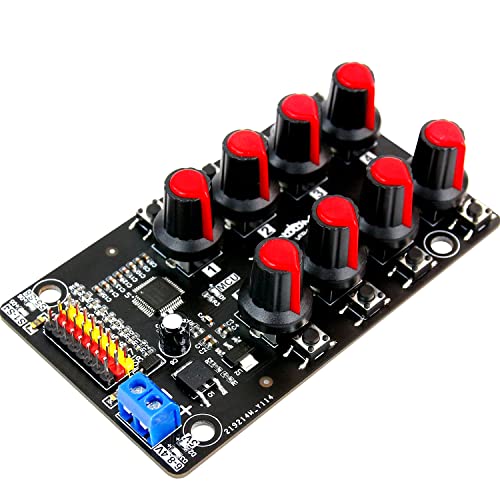
- Eight independent servo interfaces
- Manual and centering control modes
- Supports 5V–8.4V servos with over-current protection
Best For: Multi-servo RC adjustments
Compact PWM Checker

- PWM tester for servos and ESCs
- Listed for 1S–6S battery compatibility
- Five-count set for DIY RC projects
Best For: FPV and RC wiring checks
Industrial Precision – 7.5KW Three-Phase Servo Transformer
This three-phase servo transformer is designed for applications that need responsive voltage control and stable output. Among servo voltage stabilizers, it stands out for real-time adjustment, monitoring feedback, and protection features intended to support demanding power-transmission systems.
Best For: High-precision three-phase equipment and power-management applications requiring adjustable output.
Pros:
- Adjusts voltage and frequency in real time according to power demand.
- Provides fault detection and protection to help improve system reliability.
- Offers real-time data feedback and analysis for system management.
- Compact, lightweight design with stable output and adjustable voltage and current.
Cons:
- The supplied specifications provide limited information about installation and operating ranges.
- Its three-phase design may not suit single-phase applications.
Choose this model when controllability and system feedback matter more than a simple standalone stabilizer. Confirm compatibility with your three-phase setup before purchase.
FPV Power Support – 16V 3300uF RC Drone Stabilizers
This five-pack is a compact power-smoothing option for drones and FPV systems. While not a mains unit, it fits the broader servo voltage stabilizers category by helping maintain steadier BEC output during throttle changes and aggressive maneuvers.
Best For: RC drone and FPV users who need compact receiver-side voltage stabilization across multiple builds.
Pros:
- 3300uF capacitance and a 16V rating help smooth power fluctuations.
- Standard FUTABA interface supports direct receiver connection.
- Rated for operation from -40°C to 105°C.
- Five lightweight 29g units provide spares or coverage for multiple drones.
Cons:
- Designed for RC drone BEC systems rather than household or industrial power service.
- Maximum operating voltage is limited to 16V.
- Through-hole mounting may require installation space and wiring work.
This pack makes sense for builders prioritizing compactness, temperature tolerance, and backup units. Verify the receiver interface, polarity, and voltage requirements before installation.
Servo Testing Control – Treedix Digital RC Servo Tester
The Treedix tester is a diagnostic and control tool rather than a mains stabilizer. For buyers comparing servo voltage stabilizers for RC projects, it adds useful visibility by displaying supply voltage while testing servo position and operation.
Best For: RC builders, robotics hobbyists, and engineers testing servos, robotic arms, and mechanical claws.
Pros:
- Displays real-time supply voltage or servo position from 0–99%.
- Offers manual, center-reset, and automatic control modes.
- Uses a high-precision potentiometer and high-resolution PWM signal.
- Includes overcurrent protection and two servo interfaces.
Cons:
- It is a servo tester, not a standalone voltage stabilizer for incoming power.
- Its specified DC input range is 5V–8V.
- The supplied notes do not specify enclosure or connector details beyond the interfaces.
Use this device when troubleshooting servo behavior or validating a low-voltage RC setup. It is best paired with an appropriate regulated power source rather than treated as the primary stabilizer.
Telemetry Stabilization – LM0086VP DSMP 7-Channel Receiver
This DSMP receiver combines aircraft stabilization, telemetry, and voltage monitoring in one compact unit. For RC buyers researching servo voltage stabilizers, its dual BEC inputs and energy-meter telemetry are especially relevant to high-current servo setups.
Best For: Electric or gasoline-powered RC aircraft needing stabilization, telemetry, and higher-reliability servo power integration.
Pros:
- Dual BEC inputs support high-current drain servo applications.
- Telemetry includes voltage, current, mAh, temperature, altitude, and barometric data.
- Gyro stabilization supports multiple aircraft configurations and adjustable gain.
- Includes failsafe functions, antenna diversity, and firmware health monitoring.
Cons:
- This is an aircraft receiver and stabilizer, not a general-purpose mains voltage stabilizer.
- Setup may be more involved because of its extensive telemetry and mixing functions.
- Compatibility is centered on DSMX/DSM2 systems.
Consider the LM0086VP when integrated flight control and power telemetry are more valuable than a dedicated external regulator. Confirm transmitter compatibility and BEC configuration before installation.
Precision Servo Testing – 6-Channel Digital Servo Tester
For buyers comparing servo voltage stabilizers and related RC electronics, this compact digital servo tester offers hands-on PWM servo adjustment without coding. It supports 5–8.4V power from a LiPo battery or adapter, with precise manual control and built-in protection for testing projects.
Best For: RC cars, airplanes, robot arms, grippers, and other PWM servo-based builds.
Pros:
- Controls up to six PWM digital servos.
- Offers manual angle adjustment and servo reset functionality.
- Provides stated control accuracy up to 0.09°.
- Includes three-channel over-current protection.
Cons:
- Its operating range is limited to 5–8.4V.
- Designed for PWM servo devices rather than general-purpose voltage stabilization.
This is a lightweight, focused testing tool for users who need accurate servo positioning and basic electrical protection in a compact format. It is not a standalone servo voltage stabilizer, but it can be useful when evaluating servo behavior in low-voltage RC and robotics setups.
Flexible Servo Control – 6-Channel PWM Controller Board
When reviewing servo voltage stabilizers and RC control accessories, this six-channel board stands out for its adjustable speed, angle, and trigger options. It is designed for 5–12V servos and adds reverse-polarity protection plus a stated maximum current of 5A.
Best For: Multi-servo robotic arms, RC models, and DIY projects requiring synchronized movement or external triggers.
Pros:
- Supports simultaneous control of up to six servos.
- Includes lock, auto-zero, and cycle operating modes.
- Provides five angle ranges and five speed levels.
- Works with buttons, relays, NPN sensors, and ESP8266/ESP32 modules.
Cons:
- It is a servo controller board, not a dedicated voltage stabilizer.
- Requires compatible 5–12V servos and an appropriate power setup.
Its combination of synchronized output, adjustable motion, and plug-and-play trigger support makes it a versatile control board. Buyers specifically seeking servo voltage stabilization should treat its protection features as supplemental rather than as a replacement for a regulated power device.
Flight Stability Control – A3 V2 3-Axle Gyro Stabilizer
For RC aircraft shoppers researching servo voltage stabilizers and flight-control accessories, this compact A3 V2 system focuses on gyro-assisted stability rather than power regulation. It supports multiple fixed-wing layouts, four flight modes, and selectable servo frequencies for tuning aircraft response.
Best For: Fixed-wing RC airplane pilots who want selectable stabilization modes and adjustable servo-frequency support.
Pros:
- Offers normal, automatic balance, automatic scroll, and gyro-off modes.
- Supports standard, delta, and V-shaped rear-wing aircraft.
- Includes one-key automatic hover functionality.
- Provides 50Hz, 125Hz, and 250Hz servo-frequency options.
Cons:
- It is a flight stabilizer, not a servo voltage stabilizer.
- Its intended use is limited to fixed-wing RC aircraft.
- Setup still involves gain settings and aircraft-specific configuration.
This controller is a specialized choice for improving RC airplane handling and stability. Its adjustable frequencies and flight modes may help users tune servo response, but buyers needing regulated servo power should look for a separate voltage-management component.
Hands-On Servo Kit – 9g Servo Motor Tester Kit
This compact kit is a practical starting point for experimenting with servo voltage stabilizers in RC and hobby projects. It combines a 9g servo motor, tester, and 4-cell AA battery holder, giving you a simple way to test movement, center a servo, and provide a 6V power source.
Best For: Beginners and hobbyists testing or centering a single servo motor in RC, robotics, and DIY projects.
Pros:
- Includes a servo motor, tester, and 6V-capable 4-cell AA battery holder.
- Supports manual/dial, neutral, and automatic testing modes.
- The servo offers a 0–180-degree range and includes three servo horns.
- Components are individually hand-tested according to the supplied details.
Cons:
- The tester’s stated motion range is approximately 45–135 degrees.
- Requires four AA batteries, which are not listed as included.
- Designed around a 9g servo rather than a broad range of motor sizes.
As an entry-level testing bundle, this kit is more useful for basic setup and experimentation than for advanced multi-servo work. Its included power source and straightforward controls make it a convenient choice for small RC builds.
Multi-Channel Servo Tool – Yahboom 8-Channel Tester
For users comparing servo voltage stabilizers across several channels, the Yahboom tester provides an organized testing platform. It has eight independent servo interfaces, individual precision potentiometers, and support for 5V–8.4V servos, making it suited to multi-servo adjustment without coding.
Best For: RC builders and hobbyists who need to manually adjust or center multiple compatible servos.
Pros:
- Offers eight independent servo channels.
- Includes eight high-precision potentiometers for individual adjustment.
- Supports manual and centering modes controlled by buttons or knobs.
- Provides a 5–8.4V terminal-block power input with over-current protection.
Cons:
- A suitable external 5–8.4V power source is required.
- The supplied details do not indicate automatic testing mode.
- Its multi-channel layout may be more equipment than needed for one servo.
This is the most capable option here for hands-on multi-servo work. Its independent controls and over-current protection add convenience, while the broad stated voltage compatibility helps it fit a variety of 5V–8.4V servo setups.
Compact PWM Checker – Teyleten Robot Servo Tester
This five-piece Teyleten Robot tester set offers a compact way to check PWM-controlled servos and ESCs when working with RC vehicles or DIY electronics. Its documented connections are straightforward—GND for negative, VIN for positive, and PWM for the signal wire—and it is listed as compatible with servos, ESCs, and 1S–6S batteries.
Best For: DIY users and FPV or RC hobbyists needing compact PWM checking components for servo and ESC projects.
Pros:
- Uses a simple PWM connection arrangement.
- Compatible with servos, ESCs, and 1S–6S batteries according to the supplied details.
- Useful for FPV planes, RC cars, fans, and other DIY projects.
- Supplied as a five-count set.
Cons:
- The supplied notes provide limited information about adjustment modes or controls.
- Connection polarity and signal wiring must be followed correctly.
- The details do not specify a built-in voltage stabilization function.
This set is best viewed as a basic PWM-oriented testing option rather than a full-featured servo controller. It may appeal to builders who already understand RC wiring and want several compact units for compatible projects.
How We Picked These Servo Voltage Stabilizers
We selected products across the main use cases represented by this category: industrial voltage conversion and regulation, RC servo testing, drone and aircraft stabilization, and low-voltage power conditioning. We prioritized stated voltage and capacity ratings, channel count, adjustment options, protection features, installation requirements, and the type of equipment each product is designed to support.
Because these products are not interchangeable, the comparison should be treated as a buying shortlist rather than a claim that every item performs the same function. A three-phase transformer belongs in a very different installation from a six-channel PWM tester or an FPV power capacitor.
Quick Comparison
| Best For | What to Look For | Typical Products in This Roundup |
|---|---|---|
| Industrial voltage regulation | Three-phase input, kVA rating, output voltage, enclosure, and installation requirements | 7.5 kVA three-phase servo transformer |
| RC servo testing | Channel count, PWM range, operating voltage, display, and over-current protection | Digital six- and eight-channel servo testers |
| Drone and FPV power stability | Capacitor value, voltage rating, weight, wiring, and interference reduction | 16V 3300uF drone stabilizer packs |
| Aircraft stabilization | Gyro axes, flight modes, receiver compatibility, and setup controls | Three-axis gyro flight controller systems |
Key Buying Factors for Servo Voltage Stabilizers
Match the Electrical Specification
Confirm input voltage, output voltage, phase configuration, frequency, and load capacity before buying. Industrial units rated in kVA or kW require appropriate wiring, ventilation, grounding, and professional installation. Do not substitute an RC tester or capacitor module for a mains voltage regulator.
Check Compatibility and Control Range
For RC equipment, verify the supported supply voltage, PWM signal range, connector arrangement, and number of channels. A tester with adjustable speed, angle, or centering can be more useful than a basic single-mode tool when setting up several servos.
Prioritize Protection Features
Over-current protection is valuable during bench testing, while anti-interference components can help reduce glitches in compact drone systems. These features do not replace correct wiring, a properly rated power supply, or a suitable fuse.
Consider Installation and Portability
Large Servo Voltage Stabilizers may be fixed equipment, whereas RC testers and capacitor modules are intended for a workbench or model aircraft. Check dimensions, connectors, battery requirements, cooling, and whether accessories are included.
Who Should Buy Which Servo Voltage Stabilizers?
Choose the Three-Phase Transformer for Facility or Workshop Power Needs
If your priority is regulating or converting substantial three-phase electrical loads, focus on the high-capacity transformer and have an electrician confirm suitability. Review the actual load, startup surge, and required output before installation.
Choose a Digital Servo Tester for Setup and Troubleshooting
RC builders who need to center, cycle, or compare multiple servos should choose a tester with enough channels and the desired manual or automatic controls. Over-current protection is especially useful when testing unfamiliar hardware.
Choose a Capacitor Stabilizer for Compact FPV Power Filtering
Drone pilots looking to smooth short voltage fluctuations should verify the capacitor’s voltage rating, polarity, physical size, and connection method. It is a supplementary power-conditioning component, not a complete voltage regulator.
Choose a Gyro or Telemetry Stabilizer for Aircraft Control Systems
Fixed-wing and RC aircraft users should match receiver protocol, channel requirements, flight modes, and installation instructions. Confirm that the system supports the aircraft layout and control scheme before relying on it in flight.